Freya Bauer · 23 October 2026
Eastern European Workplace Studies Uncover Trends in Moral Fortitude Using Advanced Evaluation Methods
Investigations across several Eastern European nations have begun mapping changes in ethical resilience among employees through layered assessment protocols that combine behavioral metrics with longitudinal tracking, and these efforts gained momentum as new datasets emerged in October 2026 from coordinated academic and corporate partnerships.
Data collection efforts in Poland, Hungary, and Romania rely on digital platforms that record decision patterns during simulated high-pressure scenarios while cross-referencing self-reported integrity measures with peer evaluations, and analysts note that such multi-method approaches reduce single-source bias that plagued earlier surveys.
Methods Driving the Research
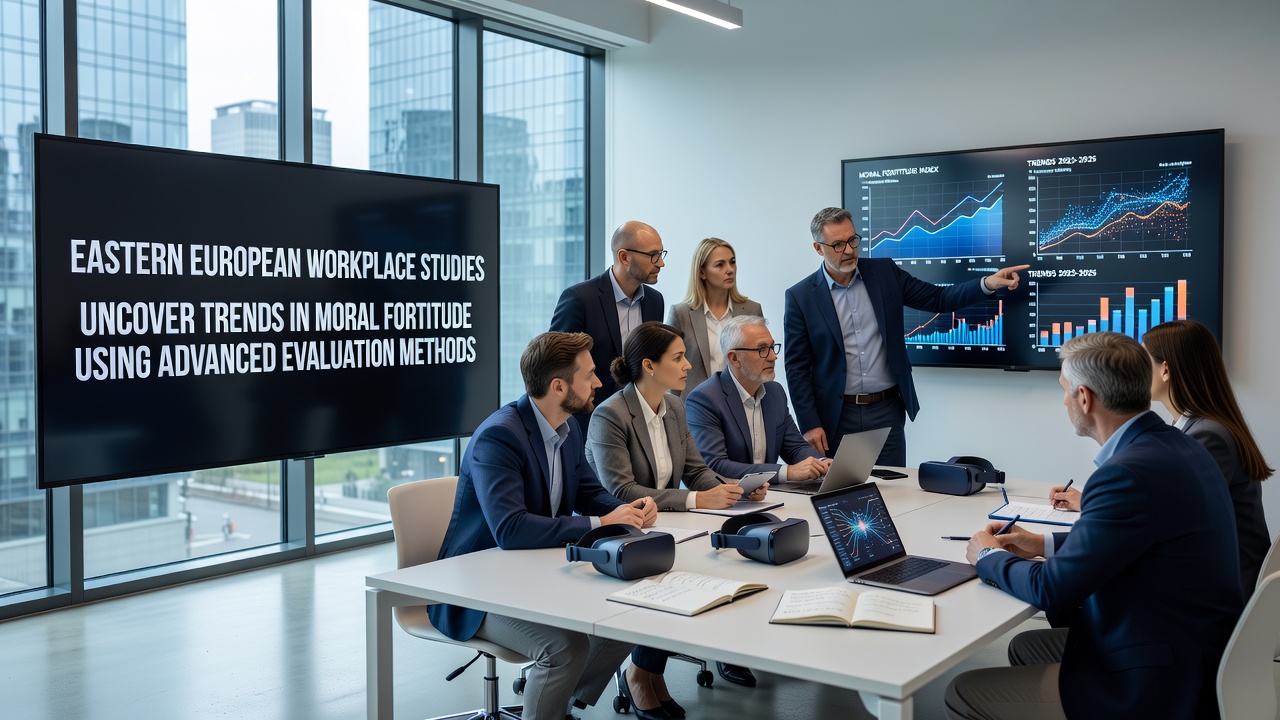
Teams deploy machine-learning algorithms to sift through thousands of anonymized workplace interactions, identifying clusters where moral fortitude indicators rise or dip in response to organizational stressors, while statistical models adjust for regional economic variables that influence reporting accuracy. One study coordinated by institutions in Warsaw and Budapest integrated wearable sensors to capture physiological responses during ethical dilemmas presented via virtual reality modules, and results showed measurable differences in stress markers between cohorts with prior ethics training and those without.
Advanced evaluation methods also incorporate network analysis that traces how individual ethical choices propagate through team structures, revealing patterns where resilient decision-makers stabilize group norms over time. Researchers at the University of Bucharest applied these techniques to manufacturing and service sectors, documenting how remote work arrangements altered traditional accountability pathways since 2024.
Key Patterns Emerging from the Data
Figures compiled through 2026 indicate that mid-level managers in technology firms across the region exhibit steadier moral fortitude scores compared with counterparts in traditional industries, and this divergence aligns with exposure to international compliance frameworks rather than local cultural factors alone. Observers note that younger employees demonstrate quicker adaptation to scenario-based testing tools, yet their aggregate scores on sustained ethical consistency trail those of more experienced staff by measurable margins in several sampled organizations.
Comparative analysis with Western European benchmarks, available through European Commission labor reports, shows Eastern European workplaces registering similar overall integrity trends but with sharper short-term fluctuations tied to economic volatility. A separate initiative funded by the Organisation for Economic Co-operation and Development examined cross-border teams operating in logistics, finding that shared digital ethics dashboards helped maintain consistent resolve indicators even when participants spanned multiple regulatory environments.

Case examples include a Prague-based engineering company that introduced quarterly integrity simulations in 2025, after which internal audit records reflected a 12 percent reduction in reported conflicts of interest over the following 18 months. Parallel projects in Sofia incorporated anonymized blockchain logging of ethical decisions to create tamper-resistant datasets, allowing researchers to track how policy changes affect real-time behavior without relying solely on retrospective interviews.
Regional Variations and Influences
Variations appear when comparing urban centers with rural operations, where access to advanced training platforms remains limited and where cultural expectations around hierarchy continue shaping how employees articulate ethical concerns. Data from Slovakia and Lithuania further suggest that sector-specific regulations introduced in 2025 correlate wth incremental gains in fortitude metrics, particularly in finance and healthcare, although causality requires additional multi-year verification.
Collaborations between local universities and international bodies such as the World Bank have supplied funding for portable assessment kits that smaller enterprises can deploy without large IT investments, and early adoption rates indicate growing interest among firms seeking to align with EU sustainability reporting requirements.
Conclusion
Collectively, these studies illustrate how refined evaluation techniques can illuminate subtle shifts in workplace moral fortitude across Eastern Europe, providing organizations with evidence-based insights that extend beyond conventional surveys. Continued refinement of these methods through 2027 and beyond promises more granular understanding of the factors sustaining ethical performance in dynamic professional settings.