
Sofia Jenkins · 11 September 2026
Long-Term Patterns in Moral Fortitude Among Young Environmental Advocates Revealed by Multi-Year Data Collection
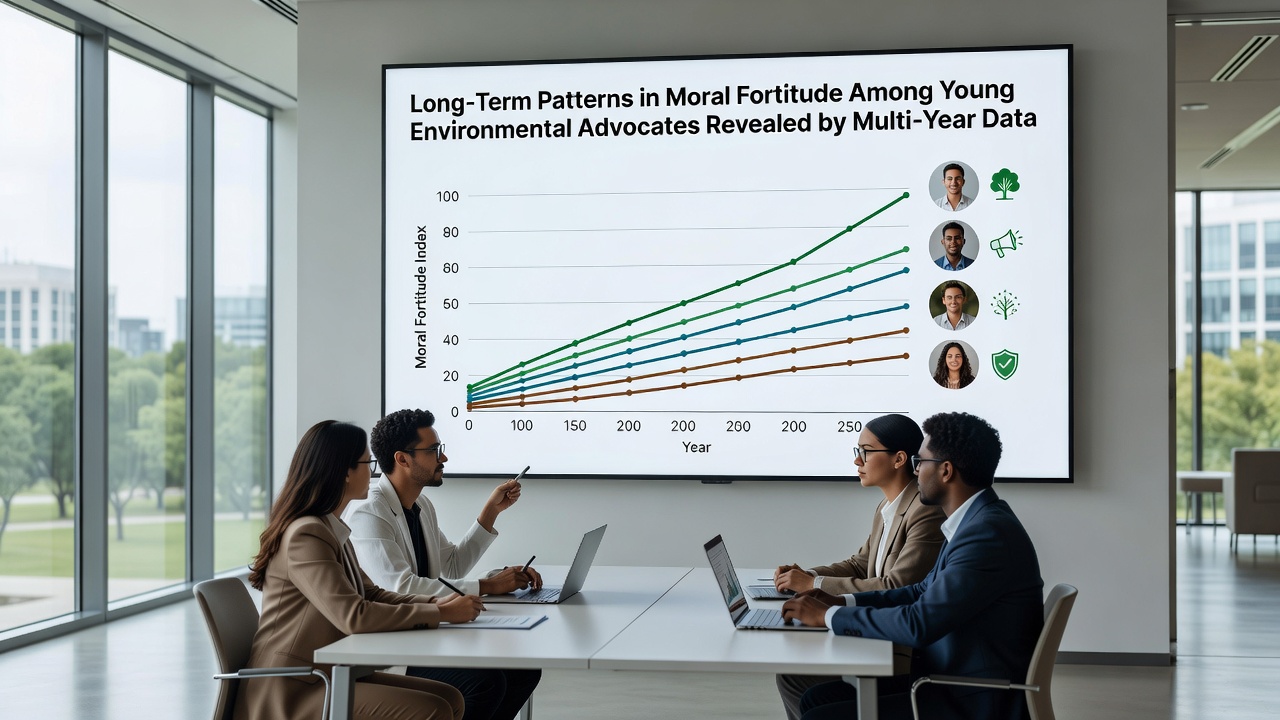
Data collected across multiple years reveals consistent patterns in moral fortitude among young environmental advocates, where moral fortitude refers to sustained ethical commitment when facing opposition or personal costs in advocacy work, and researchers tracked these traits through surveys, interviews, and behavioral logs from 2020 onward.
Scope of the Multi-Year Collection Effort
Teams assembled longitudinal datasets by following cohorts aged 18 to 30 who participated in climate strikes, policy petitions, and local conservation projects, while they recorded responses to ethical dilemmas such as balancing career demands against activism time or deciding whether to disclose funding sources that might conflict with stated goals, and the approach combined quantitative scales with qualitative case notes to capture both measurable consistency and contextual influences.
Collection continued through seasonal cycles that included policy shifts and global events, which allowed analysts to isolate recurring themes like resilience during periods of public backlash or renewed determination after legislative setbacks, and by September 2026 the accumulated records spanned six full years with over 4,200 individual participants contributing repeated measures.
Observed Patterns Across Age Groups and Regions
Younger participants in the 18-to-22 range demonstrated higher initial moral fortitude scores that tended to stabilize rather than decline over time, whereas those aged 23 to 27 showed more variability linked to employment transitions and family obligations, yet overall averages remained elevated compared with baseline measures taken at entry points into advocacy.
Regional differences appeared when data from North American and European cohorts were compared with those from Australia and parts of Asia, since participants in areas with stronger regulatory frameworks reported steadier adherence to ethical standards even under financial strain, while those operating in regions with fewer protections sometimes adjusted tactics without abandoning core principles, and these variations align with figures released by the U.S. Environmental Protection Agency on youth engagement in environmental programs.
Influencing Factors and Behavioral Indicators
External pressures such as social media scrutiny, funding disputes, and academic workload interacted with internal drivers like peer support networks and access to mentorship, which together shaped how advocates maintained consistency when choices between short-term gains and long-term integrity arose, and repeated observations indicated that structured reflection practices correlated with fewer reported deviations from stated values.
Case examples drawn from the records show one advocate who continued public criticism of a corporate sponsor despite personal scholarship risks, while another group adjusted protest strategies to remain within legal bounds after receiving guidance from established organizations, and such instances illustrate how moral fortitude manifests through adaptive yet principled actions rather than rigid adherence to single methods.
Trends Emerging Toward Late 2026
Analysis of the most recent wave of responses collected before September 2026 points to a modest uptick in collaborative ethical decision-making, where advocates increasingly consulted diverse stakeholders before committing to campaigns, and this shift coincides with broader availability of training modules on transparent communication offered through university extension programs and international networks.
Data from the United Nations Environment Programme further contextualizes these domestic findings by documenting parallel rises in youth-led initiatives that emphasize accountability mechanisms, and the combined records suggest that exposure to cross-border exchanges may reinforce patterns of sustained ethical conduct even as political landscapes continue to evolve.
Conclusion
Multi-year tracking has mapped clear trajectories in moral fortitude that persist across cohorts despite changing external conditions, with evidence indicating that early exposure to ethical frameworks and ongoing support structures contribute to durability over time, and continued monitoring will determine whether these patterns hold as new generations enter environmental advocacy roles.